Verify design and inspection data
The risk study started by validating design references, wall-thickness records, field observation notes, and the GTM 10-feet technical layout.
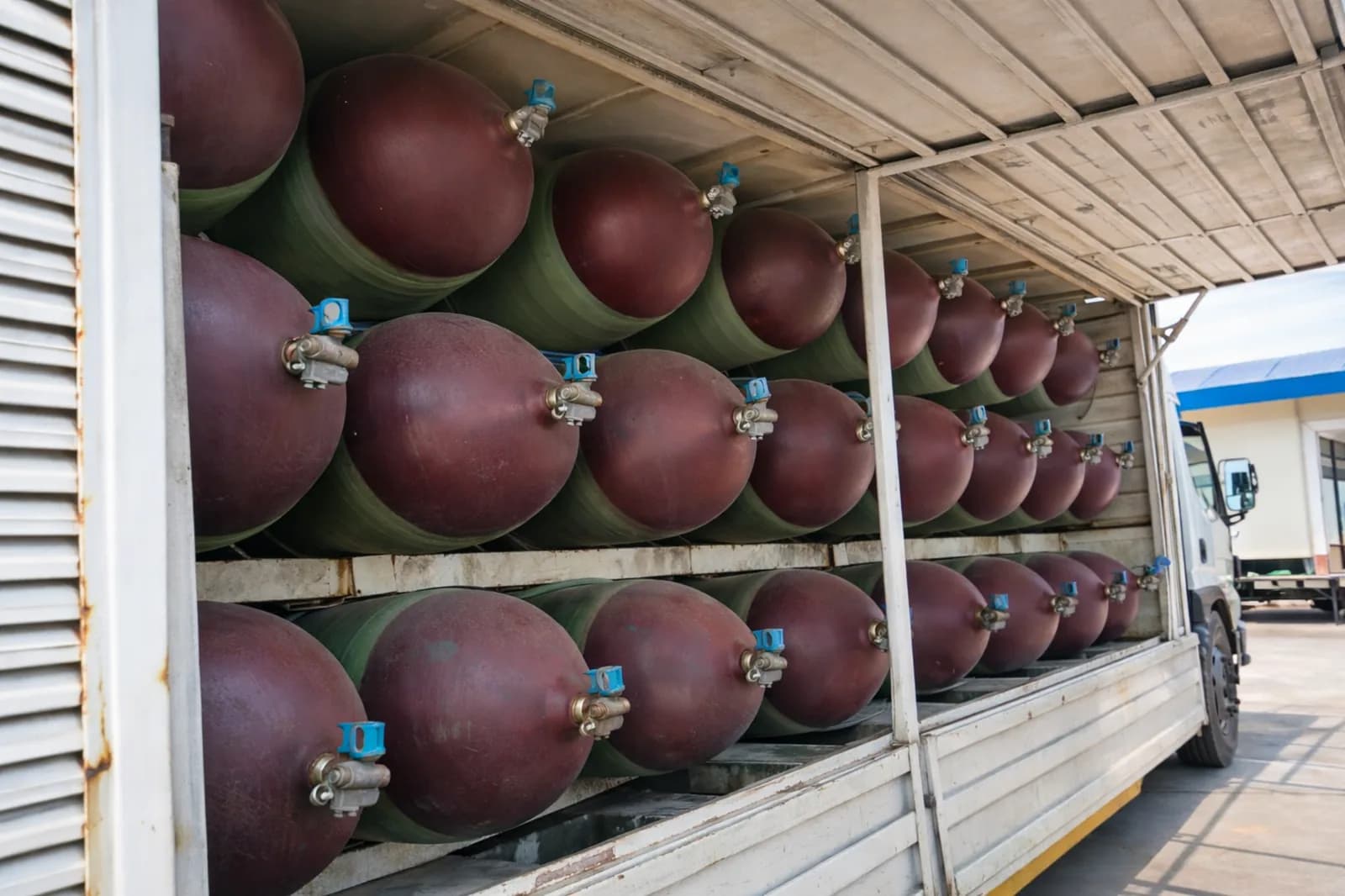
A technical risk assessment for a 10-feet CNG transport module, focused on composite-cylinder integrity, corrosion exposure, and inspection strategy.
This assessment addressed the operating risk of a Gas Transport Module (GTM) using composite Type 2 cylinders for compressed natural gas storage. The work reviewed design basis, applicable standards, likely degradation modes, and inspection strategy to provide clearer integrity visibility for repeated transport and operating cycles.
The risk study started by validating design references, wall-thickness records, field observation notes, and the GTM 10-feet technical layout.
The report evaluates the module using API RP 581 Level 1 by combining damage factor, generic failure frequency, management factor, and area-based consequence.
The technical output was converted into focused inspection scopes for head areas, exposed zones, and composite-wrap condition monitoring.
The system combined metallic and composite components, which meant the assessment had to account for different degradation mechanisms, inspection access limits, and operating realities without oversimplifying the actual risk picture.
We structured the analysis around risk categorization, head-area corrosion exposure, composite wrap condition awareness, and interval recommendations so the client had a practical inspection and monitoring basis for continued operation.
The report points to thinning and atmospheric exposure at the head area as the primary technical risk, while the shell is protected by composite wrap.
The module still operates at 250 bar with measured thickness above the design minimum and without significant physical damage noted during inspection.
Keep operating pressure at or below 250 bar according to the design basis.
Perform UT inspection on the cylinder head at a maximum interval of 4 years.
Run visual and tactile inspection on the wrap shell to detect abrasion, delamination, or transport-related damage.